Concrete action
Each concept starts with the thing supporters came to do: donate, act, learn, or share.
UX, accessibility, and design engineering for mission-driven teams
These are quick, focused explorations: one practical screen, one clear user journey, and a short note on why it matters. The goal is not to redesign everything. The goal is to show how I think about donor trust, campaign action, accessible content, and product handoff.
Each concept starts with the thing supporters came to do: donate, act, learn, or share.
Donation and campaign flows need proof, transparency, and low-pressure next steps.
The structure is intentionally component-minded so a web team can actually build from it.
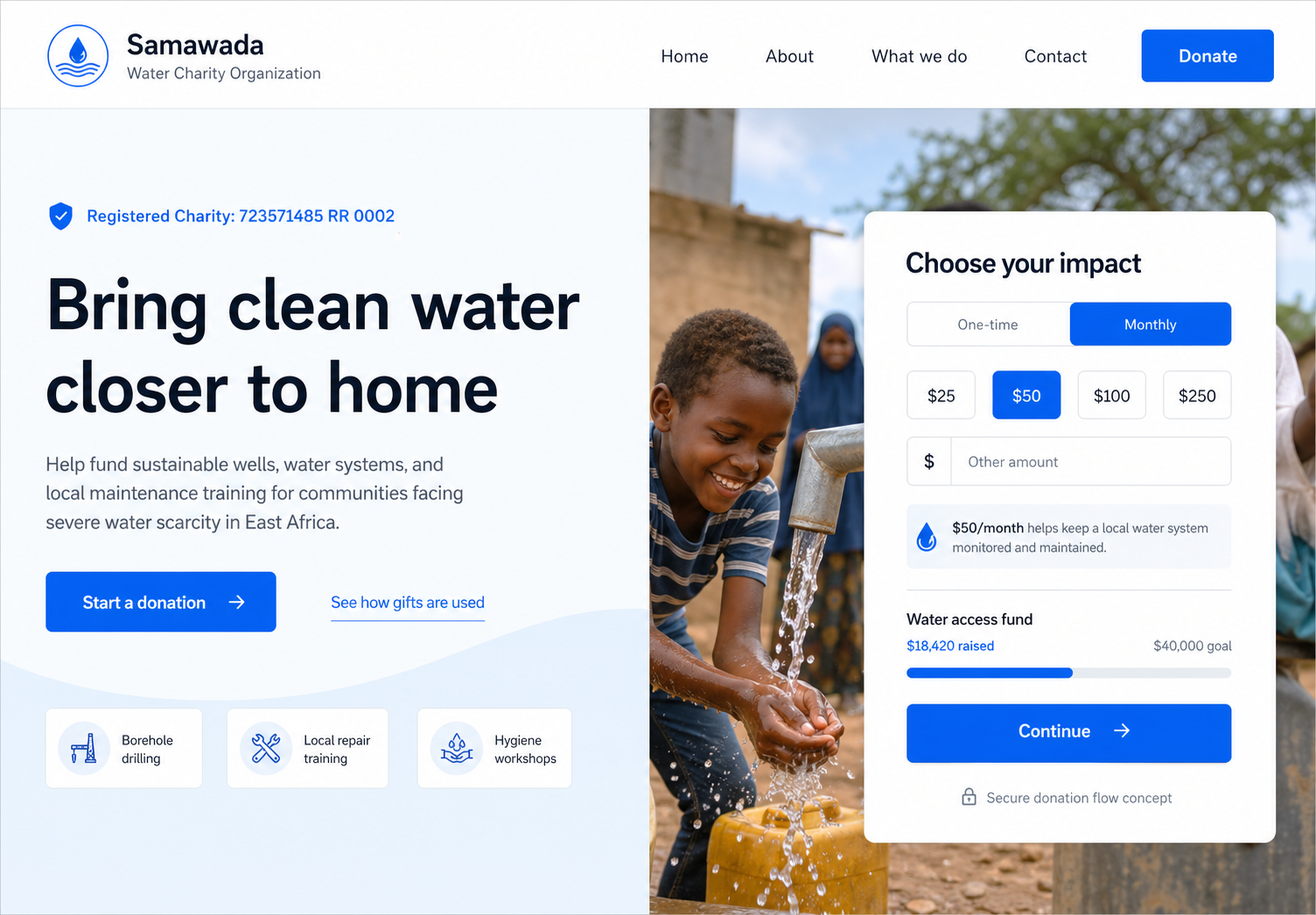
Samawada Organization
The opportunity here is not just a cleaner donation form. It is helping donors understand how gifts connect to boreholes, local maintenance training, field reporting, and long-term community water access.
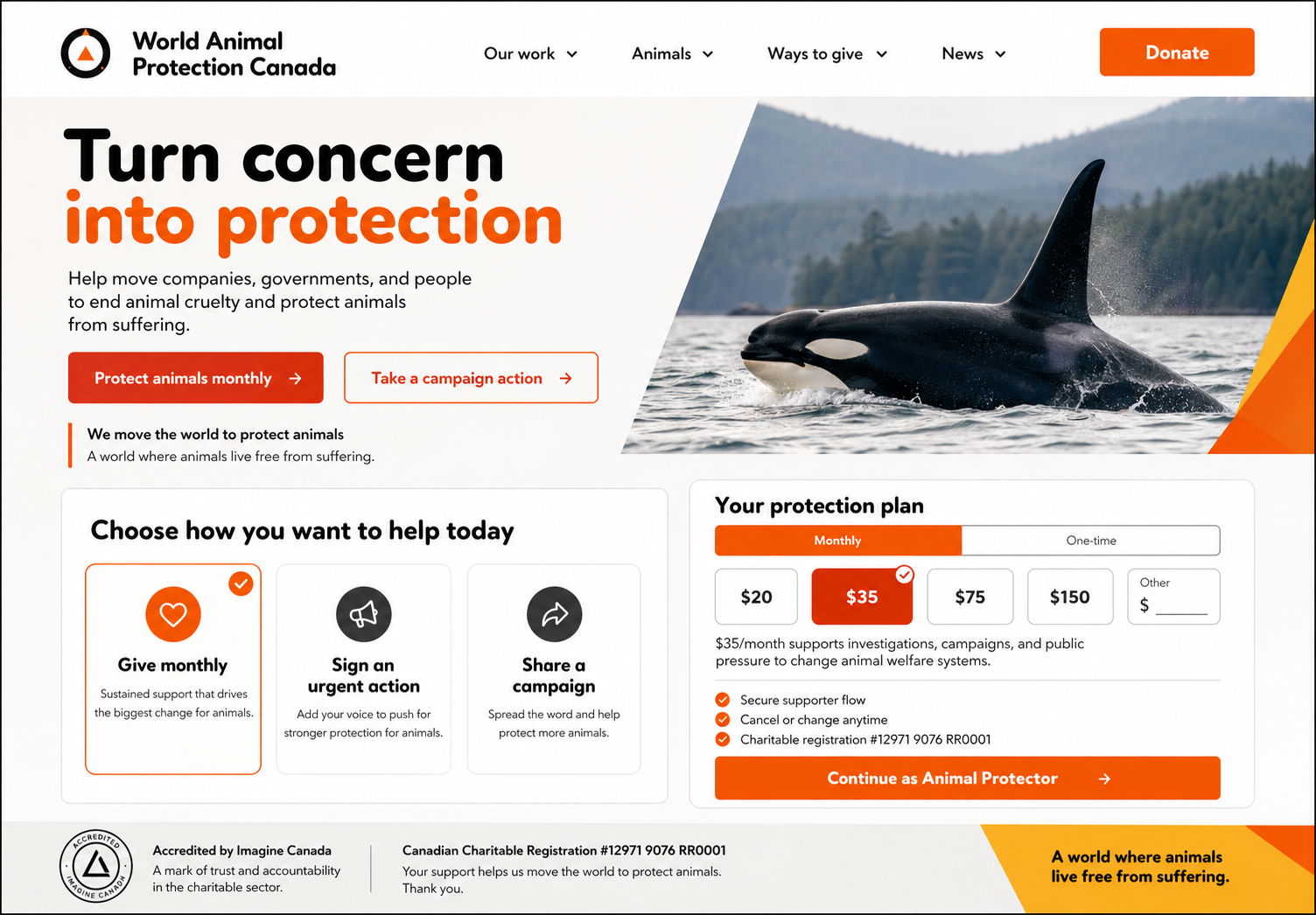
World Animal Protection Canada
For an animal protection campaign, supporters should not have to guess what the next useful action is. The concept brings donation, campaign action, and supporter confidence into one focused decision point.
CPAWS / SNAP Canada
CPAWS already has strong public education and campaign content. The prototype direction is a sharper hub that helps people move from learning about land, freshwater, and ocean protection into a local action or donation path.
Protect land, freshwater, ocean and wildlife
Ask decision-makers to uphold protection for marine ecosystems.
Support national and regional teams protecting nature across Canada.
See what is protected, what is at risk, and where action is needed.
Stephen Lewis Foundation
The content opportunity is to protect the depth of community-led work while still giving donors a simple path to understand, trust, and support it. This concept treats content modules as reusable pieces for CMS publishing.
Flexible funding helps frontline organizations respond to what communities actually need.
Human-first narrative with clear consent and accessibility notes.
What the fund supports, without flattening community complexity.
Donate, share, learn, or sign up for updates.
Available for UX, design systems, accessibility, and design engineering
If one of these ideas is close to a real problem your team is facing, I can turn it into a tighter flow, Figma prototype, implementation-ready component map, or accessibility review.
Connect on LinkedIn